If you hold an Over Sand Vehicle permit for the Assateague Island beach here in Worcester County, you already know the feeling of dropping onto the sand with rods in the bed and a whole afternoon ahead of you. What most drivers think about far less is the mechanical side of that trip. Airing down, airing back up, and rinsing the truck afterward are not fussy extras. They are the three things that decide whether a beach run costs you nothing or quietly costs you a set of tires, a brake job, or a corroded line you will not see for two seasons.
We see a lot of beach trucks come through our tire shop in Pocomoke City, MD, and the pattern is consistent. The sand itself rarely does the damage. The drive home does. The trip back up Route 611 and Route 113 is where the bill gets written.
What Assateague Actually Asks of a Truck
Beach driving at Assateague Island National Seashore is permit only, and the Park Service sets real limits on what can go out there. Your vehicle needs to be four-wheel drive or all-wheel drive, no longer than 26 feet and no wider than 8 feet, with a maximum of two axles and four wheels per axle. ATVs, UTVs, and rental cars are not allowed.
The required equipment list is not a suggestion. You need a non-plastic shovel with a blade at least 6 inches square and a handle at least 18 inches long, a jack able to lift one wheel clear of the sand, a jack support of at least 12 inches by 12 inches, and a tow rope, strap, chain, or cable rated for a minimum of 6,000 pounds of pulling strength. You also need a tire gauge, and the Park Service is specific about it: the gauge has to be able to record a pressure of 15 pounds or less.
That last requirement tells you what the park expects. A gauge that only starts reading at 20 psi is useless out there.
Speed limits in the OSV zone are 25 mph, dropping to 15 mph within 100 feet of other vehicles, wildlife, pedestrians, or people on horseback. The Maryland OSV zone can also be partially or completely closed during piping plover nesting season, which may run from March 15 through August 31 or later. That is a big part of why fall fishing feels so busy out there, and September and October are when our phone starts ringing with beach-truck questions.
Why Airing Down Works
The Park Service instruction is simple: lower tire pressure to between 15 and 20 pounds before you drive the sand. The reason is worth understanding.
At highway pressure, a tire is a small, stiff contact patch that cuts down into loose sand like a knife. Let air out and the sidewalls relax, the tread flattens, and the footprint gets noticeably longer. Same weight, more area, less pressure on any one square inch of sand. The truck floats on the sand instead of digging a trench in it.
That is also why the Park Service warns against spinning the tires. Spinning digs them deeper and raises the chance the frame bottoms out, which turns a five-minute problem into a recovery. Local guidance from the Assateague Mobile Sportsfishermen’s Association says the same thing from experience: if you are stuck, dig out in front of all four tires at least a foot or two rather than standing on the throttle. Driving in existing tracks is easier than breaking fresh sand, and backing up a few feet after you stop gives you a running start instead of a wall of sand at each tire.
Worth carrying, per the park’s own tips: water displacement spray for drying wet engine electrical parts, and four boards measuring 2 by 6 by 36 inches to slide under the tires if you do get planted.
How to Air Down Without Guessing
Airing down by feel is how people end up either stuck or on a ruined tire. A few habits make it repeatable.
- Write down your normal pressure before you touch the valve. The U.S. Tire Manufacturers Association points out that your recommended inflation pressure is on a label on the driver’s door or in the owner’s manual. That number, not the number molded into the sidewall, is what you are coming back to.
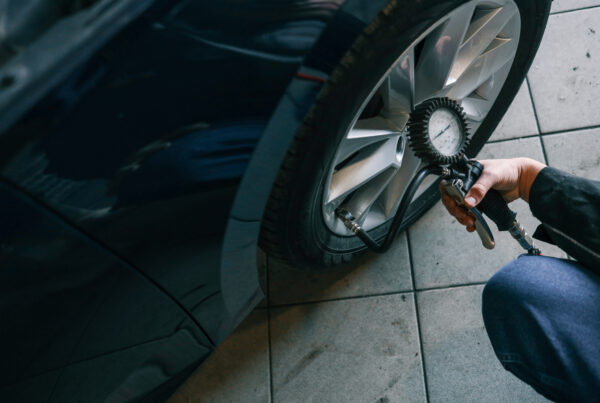
- Use the gauge every time. Thumb pressure on a sidewall cannot tell 15 psi from 22 psi, and the difference matters in soft sand.
- Go down in stages. Let some air out, check, and repeat. Overshooting means finding air before you have even reached the beach.
- Check cold when you can. USTMA recommends checking tires cold, meaning after the vehicle has been parked at least three hours, and checking at least once a month as a matter of routine. Also check before long trips, heavy loads, or towing, which covers most of what a beach truck does.
- Remember that weather moves the number. Inflation pressure shifts about one to two pounds for every 10 degrees of temperature change. A cool October morning and a warm afternoon are not the same starting point.
Expect your tire pressure warning light to come on while you are down at beach pressure. That is not a fault. Think of it as a free reminder sitting in your dash the whole time you are on the sand.
The Part People Get Wrong: The Drive Home
Here is where the real damage happens, and it is almost always the same story. A driver from Pocomoke City airs down to 18 psi at the ramp, fishes the surf line all afternoon, then heads up Route 113 still at beach pressure because the air pump line looked long. It is only twenty miles, they figure.
Twenty highway miles at beach pressure is exactly the situation tire engineers warn about. USTMA is blunt: underinflated tires generate excessive heat build-up and stress, causing irregular wear and internal damage. Internal damage is the part that should stop you. A tire that got cooked on the way home looks no different when you park it, which is the whole problem. No inspection can undo a casing that has already been overheated from the inside.
Beach pressure is also nowhere near the load-carrying pressure your truck was designed around. A loaded bed, a soft sidewall, and highway speed make the tire flex further and faster than it was meant to, and heat is the byproduct.
The fix takes minutes. Air pumps are available right after you exit the OSV area, so air up there before you get on 113 or Route 12. Not at home, not tomorrow morning. When the pressure light goes back off, you have a rough confirmation that the job actually got done.
If you are running a fleet or a work truck that sees the beach regularly, this is the single habit most worth enforcing. It is also the reason a lot of drivers around Pocomoke City, Snow Hill, Berlin, and Ocean City keep a good gauge and a small compressor in the truck permanently.
Sand and Salt Do Not Stop at the Ramp
The Park Service gives OSV drivers one flat instruction: do not drive in salt water. That rule is also the source of a common misunderstanding, because plenty of drivers assume that if they never drove through the surf, the truck stayed dry.
The exposure at Assateague is not immersion. It is spray, wet sand, and tide wash. A half-ton pickup that never got stuck and never touched a wave still comes home with damp, salty sand packed behind the wheels, up in the wheel wells, around the caliper area, and along the frame rails. Salt in that sand does not dry out and go away. It sits in the places you cannot see and stays wet longer than the paint does.
That is not a cosmetic issue. According to AAA, salt-driven rust can weaken structural parts, brake lines, and suspension systems. Those are all on the underside of the truck, where you are least likely to notice. AAA also notes that because corrosion is treated as normal wear and tear, the resulting damage is usually not covered by insurance. It is on the owner.
Sand has its own separate effect. Grit that works into brake hardware acts like a lapping compound between pad and rotor, which is why a truck can come back from the beach with brakes that sound gritty or feel different underfoot. If you want the broader picture on brake life, our post on how to extend the life of your brakes covers the habits that matter year round.
What a Real Salt-Water Rinse Looks Like
Most people rinse the wrong part of the truck. Paint and wheel faces are what you can see, so that is what gets scrubbed, while the undercarriage holding all the salt gets skipped.
A rinse that counts reaches the undercarriage, the wheel wells, the inside faces of the wheels, the brake components, and the frame rails. AAA recommends car washes that include an underbody spray, which is the easiest way to get water where it needs to go, and suggests rinsing loose salt off first so you flush it away rather than grind it around.
Timing matters as much as thoroughness. Salt does its work while it is sitting there, so a rinse the same day or the next day is worth far more than a careful wash at the end of the season. AAA’s general guidance is washing at least every two weeks and more often after heavy salt exposure, and a beach run counts as heavy exposure. On an electric truck the stakes are higher still: salt reaches battery packs, cooling lines, high-voltage connectors, and charging ports, so a regular undercarriage rinse is not optional.
Before and After a Beach Run: The Checks Worth Making
None of this takes long once it is a routine.
Before you go:
- Note your normal cold inflation pressure from the door label
- Look over tread depth and sidewalls, and check the spare while you are down there (older rubber cracks faster in salt air, so it helps to know how old your tires are)
- Confirm your gauge reads down to 15 pounds or lower
- Pack the shovel, jack, jack support, and a tow strap rated at least 6,000 pounds
- Toss in the boards and a can of water displacement spray
When you come off the sand:
- Air back up at the exit, before you touch the highway
- Confirm the pressure light goes out
- Rinse the undercarriage, wheel wells, and brakes as soon as you reasonably can
- Listen to the brakes on the first few stops
- Note any new vibration, pulling, or steering shimmy
A pre-season look at tires and brakes is one of the most common reasons drivers book tire service in Worcester County, MD in the fall. If you would rather check it yourself first, our guide on how to perform a tire safety inspection walks through it step by step.
Warning Signs Worth a Trip to the Tire Shop
Get the truck looked at if you notice any of the following after beach runs:
- Grinding, gritty, or scraping sounds from the brakes
- A squeal that does not clear up after a few stops
- Pulling to one side under braking
- Vibration through the steering wheel at highway speed
- A tire pressure light that keeps coming back after you have aired up
- Uneven or unusual wear across the tread
- Rust flaking off suspension parts or brake lines when you look underneath
Any of those is worth having someone look at it. As for what a repair or a new set of tires will run, we are not going to guess in a blog post, because parts and labor change too often for that to stay honest. Ask us for a current quote and we will give you real numbers for your vehicle.
Tire Service for Worcester County, MD Beach Trucks
Beach access is one of the best things about living down here, and it asks more of a truck than a commute does. Air down properly, air back up at the exit, and get the salt off the underside. That covers most of it, and we will handle the rest.
If your truck runs the Assateague OSV zone and you have been looking for a tire shop near you that actually understands sand driving, bring it by our shop on the Lower Eastern Shore for a look at the tires, brakes, and undercarriage. We are a short drive from Snow Hill, Berlin, and Girdletree, and we work on everything from a family half-ton to a full fleet. Schedule an appointment and we will make sure it is ready for the sand and none the worse for it afterward.