Your tires are the only part of your vehicle that touches the road, making them one of the most important components for safety. Worn or poorly maintained tires can reduce traction, increase stopping distance, and raise the risk of blowouts.
The good news? A basic tire inspection only takes a few minutes and can help you catch problems early. At Nock’s Tire & Auto, we recommend drivers perform a quick tire check at least once a month and before any long trip.
Here’s how to do it.
Step 1: Check Your Tread Depth
Tread depth plays a major role in traction, especially on wet roads. As tread wears down, your ability to grip the road and stop quickly decreases.
The Penny Test
A simple way to check tread depth is with a penny:
- Insert a penny into the tread groove with Lincoln’s head facing down.
- If you can see the top of Lincoln’s head, your tread is too worn.
- If part of his head is covered by tread, you’re still in a safer range.
If your tread is worn to 2/32 of an inch or less, it’s time to replace your tires. You should also check for uneven wear, which can signal alignment or suspension issues.
Step 2: Inspect for Cracks and Damage
Next, take a close look at your tire’s sidewalls and tread area.
Watch for:
- Small cracks in the rubber (signs of dry rot)
- Bulges or bubbles
- Cuts or punctures
- Exposed cord
- Tread separation
While minor surface cracking can happen over time, you should never see cords or feel air leaking. Bulges or tread separation are serious safety concerns and require immediate attention. If you notice any of these warning signs, have your tires inspected right away.
Step 3: Check Your Tire Pressure
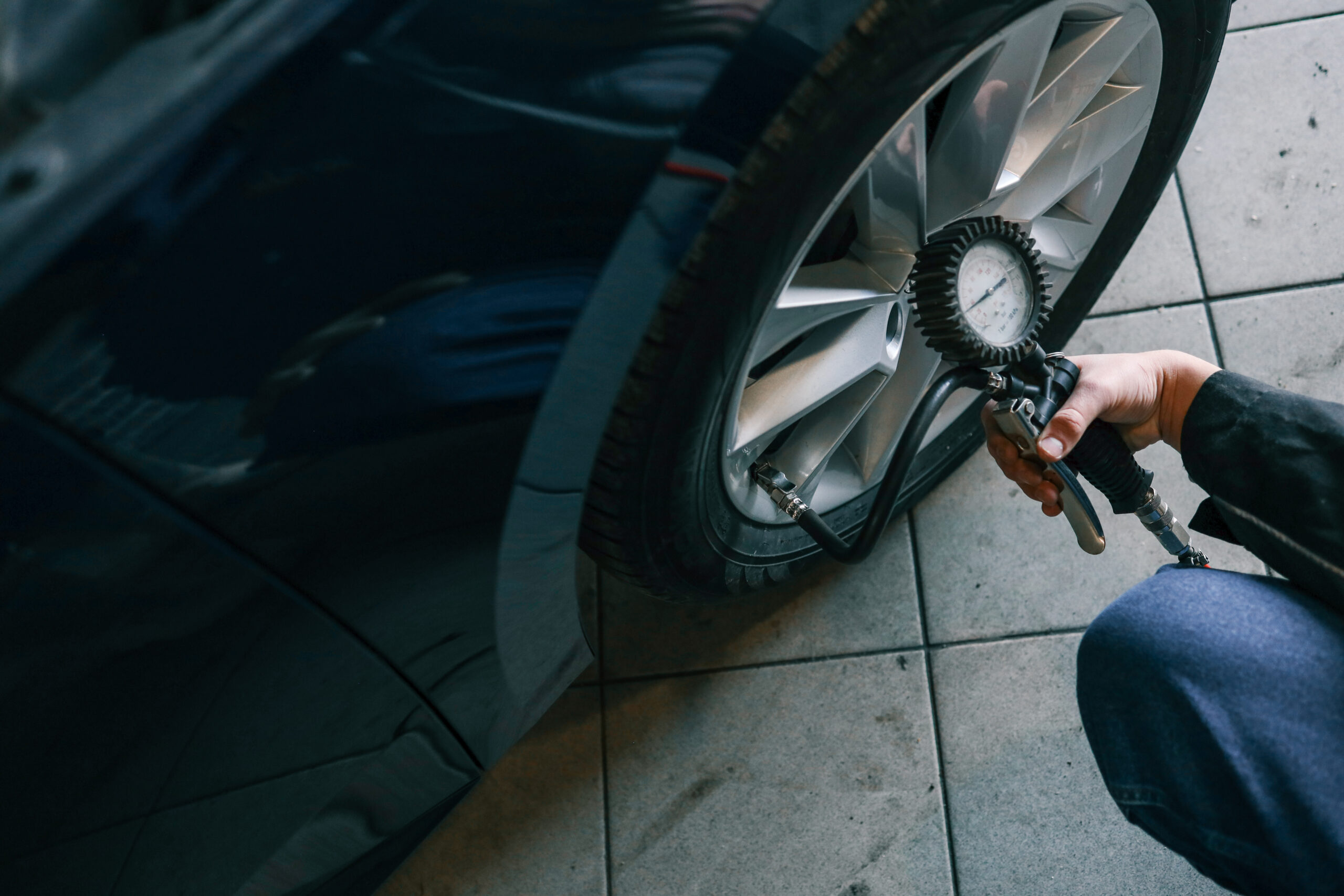
Proper tire pressure improves handling, fuel efficiency, and overall safety. Underinflated or overinflated tires wear unevenly and can increase the risk of failure.
How to Check Pressure
- Use a handheld tire pressure gauge.
- Check pressure when tires are cold (before driving or after sitting for several hours).
- Compare the reading to the recommended PSI listed on the sticker inside your driver’s side door jamb—not the number printed on the tire itself.
- Make sure all four tires match the recommended pressure.
If your vehicle has a Tire Pressure Monitoring System (TPMS) warning light on, don’t ignore it. Have it checked promptly.
Bonus Tip: Don’t Forget the Spare
If your vehicle has a spare tire, check its pressure too. You don’t want to discover it’s flat when you actually need it.
When to Schedule a Professional Inspection
While monthly self-checks are helpful, it’s still important to have your tires professionally inspected during routine maintenance visits. At Nock’s Tire & Auto, we can check tread depth, alignment, balance, tire age, and overall condition to ensure everything is road-ready.
A quick inspection today can help prevent expensive repairs or dangerous situations. If you’re unsure about the condition of your tires, schedule an appointment with Nock’s Tire & Auto today. We’re here to help you drive safely and confidently every mile.